
Glossary
Hair Blending for Grey Grow-Out
Blending softens the line between dye and grey with lowlights, glosses, or cuts—without full cover.
Grey Hair
Glossary - Updated September 2026
Salt-and-pepper hair mixes darker and white strands. See when the pattern guides blending, cuts, and care.
Updated September 2026. We revise salt-and-pepper hair meaning when product options, routine advice, or the supporting evidence changes. How we update guides.
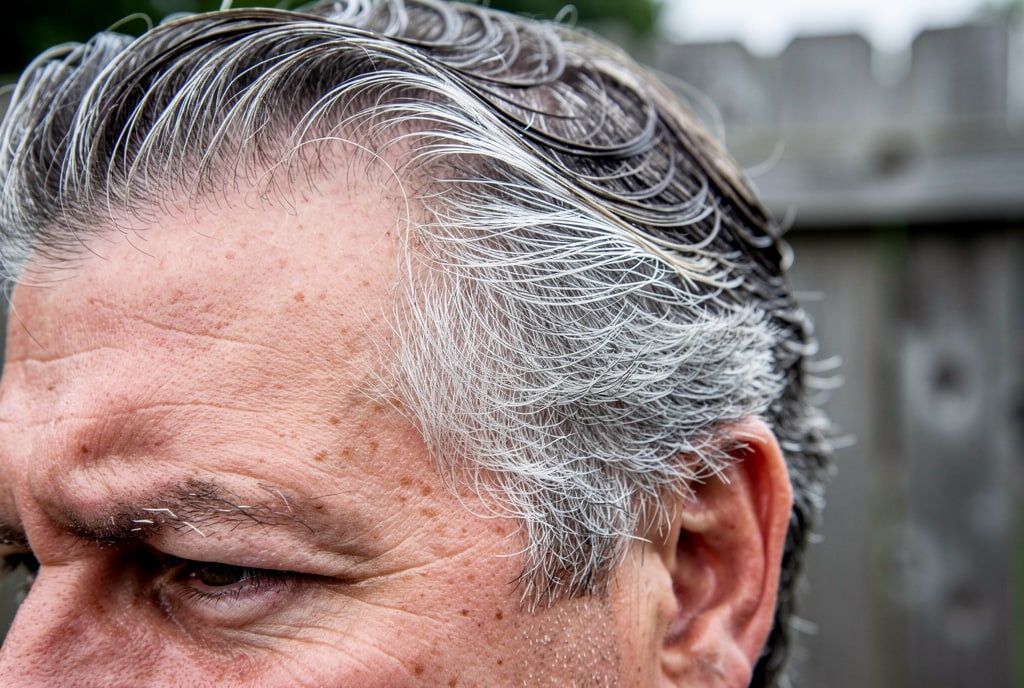
Salt-and-pepper hair mixes darker pigmented strands with white or grey strands in a visible pattern. The phrase is about contrast you can see—not about a required dye job and not about a single shampoo category.
The term helps when it changes blending, cut, or tone decisions. If someone uses it only as a compliment or insult, translate it back to what you want the hair to do next week.
| Pattern signal | Decision it supports |
|---|---|
| Even scatter of white through dark | Embrace + polish cut; light tone care |
| Bright temples, darker crown | Blending or strategic cut to soften focus |
| Harsh dye line under silver | Blending phase or planned grow-out |
| White pieces look yellow | Brassiness path before more pigment |
White pieces show product film and yellow cast quickly. Keep routines light at the roots if density is fine. If some strands feel coarse, use the wiry hub. For grow-out contrast, read blending and blending phase.
Purple shampoo can keep the “salt” clear when brassiness is real—see purple shampoo for grey hair—but it will not equalize dark and white pigment.
Salt-and-pepper is useful when it names a pattern you want to soften, celebrate, or maintain. Pair the word with a cut, blend, or wash-day plan rather than a pile of unrelated products.
Salt-and-pepper can look even in soft indoor light and more contrasted in sun. Photograph the pattern near a window before deciding you need full cover. Sometimes a cut that softens temple focus is enough. Sometimes a blend is the right bridge. Sometimes embracing the scatter with clearer tone is the calmest path.
Clothing and background color change how the mix reads. Dark jackets can make white strands pop; lighter neutrals can soften the same pattern. That is styling context, not a pigment emergency.
The “salt” shows film and yellow cast quickly. Keep roots lighter on product if density is fine. Use purple shampoo only when daylight yellow is real. Soften any wiry white pieces through the wiry hub so the pattern looks polished rather than frayed.
If you are growing out dye into salt-and-pepper, read blending and blending phase. The glossary term should point to a next appointment question, not a cart full of unrelated bottles.
Compare virgin grey when color history matters, and wiry hair when texture—not contrast—is the complaint. Return to the glossary hub when you need the wider map of salon language.
Salt-and-pepper describes a visible mix of darker pigmented strands with white or grey strands. It is a pattern term, not a product type.
Only if you want cover. Many people keep the pattern and use cut, blending, or tone control to make contrast look intentional.
Protect clarity of the white pieces, soften any wiry surface, and choose a shape that frames the mix. Tone only when yellow cast is real in daylight.
Blending softens the line between dye and grey with lowlights, glosses, or cuts—without full cover.

Grow-out is the period when natural grey roots become visible while older dyed lengths remain.

Melanin is the pigment family that gives hair its natural color before follicle pigment production slows.
Grey hair care notes — transition tips, science, and silver routines